
Beauregard Projected and Actual Release
Louisiana’s official public term is “projected release date (if applicable).” It is available through the DPS&C Imprisoned Person Locator by telephone. The date estimates a future custody milestone after DPS&C processes the sentence paperwork and applies the relevant credit and eligibility rules. It is not a court order, a guarantee, or proof that the person left custody.
An actual release is a completed agency event. For a parish booking, the BPSO released roster can show the exact date and time that the booking moved to the released side of its system. For a state prisoner, DPS&C controls the state custody record. A release can still lead to parole, good-time supervision, another facility, or another authority. Full-term discharge means something different: the relevant sentence or supervision has ended.
Scheduled versus actual: Always date a projection “as reported on” the day obtained, then verify the later event with the releasing agency.
- Projected release date
- A future estimate based on current records and credit rules.
- Actual release date
- The date a named agency completed its custody exit.
- Good time
- Statutory diminution, or sentence reduction, earned and allowed under controlling law.
- Detainer
- A request or legal hold that can lead to continued custody or transfer.
Find a Beauregard Release Date
Begin with the person’s present legal and custody status. The DPS&C inmate-information page explains Louisiana’s online LAVNS path and its telephone locator. The online search can show state custody or community-supervision data, but the locator is the public route that specifically returns a projected release date when applicable.
- Identify whether the person is pretrial, serving a parish sentence, assigned to DPS&C, or held by another authority.
- Obtain the exact name, date of birth, booking number, DPS&C number, case number, and facility when available.
- For DPS&C, call 225-383-4580 and provide the DPS&C number or the name plus date of birth.
- Ask for the “projected release date (if applicable)” and note the date of the call.
- For a parish sentence, call the Beauregard Parish Detention Center at 337-460-5520 and request the official jail computation or the record custodian.
- Compare the sentence, offense date, and custody credit with the 36th Judicial District Court judgment.
- After the date passes, confirm the actual custody event with BPSO, DPS&C, or the receiving agency.
The official DPS&C inmate-information page shows that the locator may provide a facility assignment, facility contact, assigned Probation and Parole district, and the projected date.
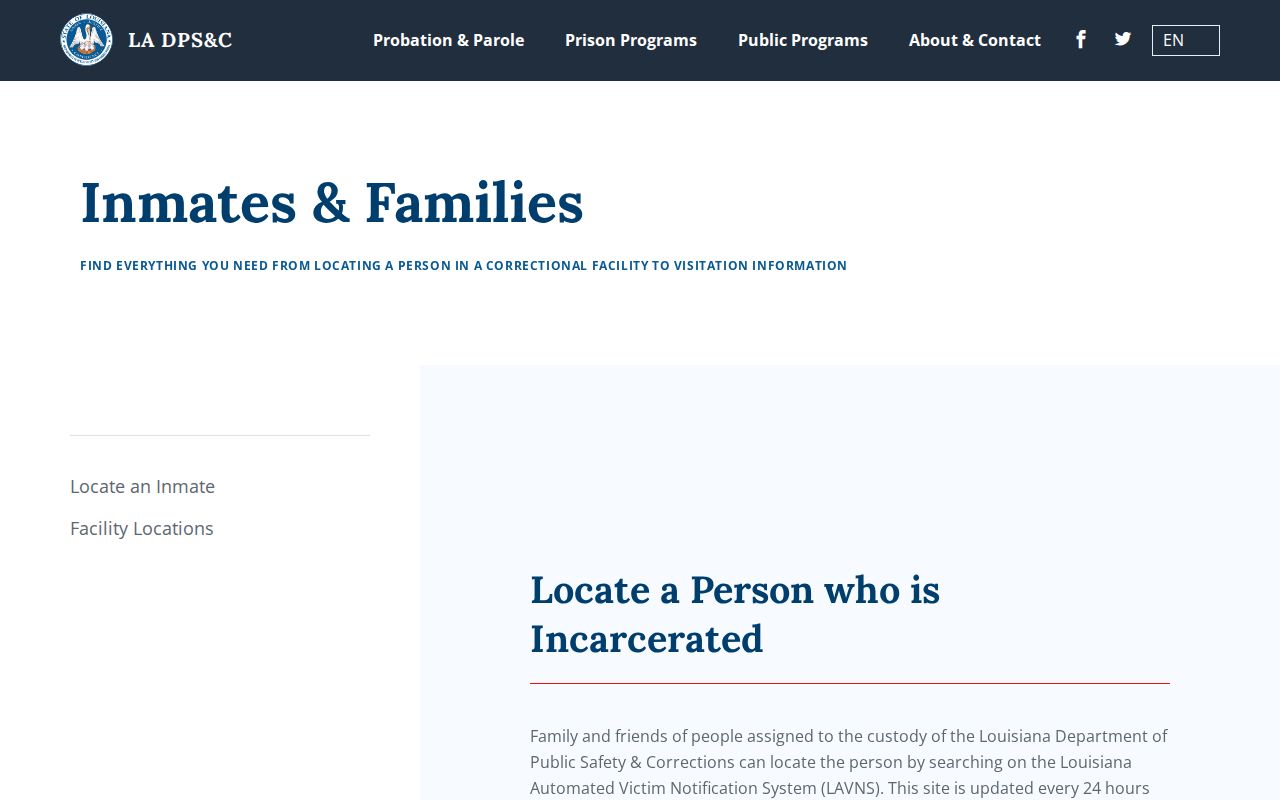
The screenshot confirms the state source to use instead of an unofficial date calculator.
For the full custody and release-record path, use the Beauregard Parish released-inmate lookup. It distinguishes a live roster entry from the short BPSO release window and from an older record request.
Note: A pretrial detainee has no fixed sentence-based release date while bond, court orders, and holds remain unresolved.
Missing Beauregard Projected Release Dates
A missing date does not prove an indefinite sentence or a data error. The DPS&C frequently asked questions explains that time computation may be incomplete, especially when official sentencing-court paperwork for a recently sentenced person has not reached the agency. The automated time-computation information number is 225-342-0799.
Confirm that the sentencing court sent the signed judgment and related papers. Then verify the person’s identifier and ask whether computation is pending. If the sentence or credit appears wrong, obtain the court judgment and seek review from the official custodian. Do not calculate a release by simply adding a term to the sentencing date. Presentence credit, concurrent or consecutive terms, later sentences, statutory exclusions, and holds can change the result.
The court record and agency computation serve different roles. The judgment identifies the sentence imposed and may address credit for time served. DPS&C or the parish jail applies the governing computation to its custody record. If a court minute shows an amended judgment, provide that exact record to the computing agency. A clerk’s online display is unofficial, so obtain an office copy or certified record when the date dispute depends on the judgment’s wording.
The DPS&C FAQ documents why a date may not yet be ready.
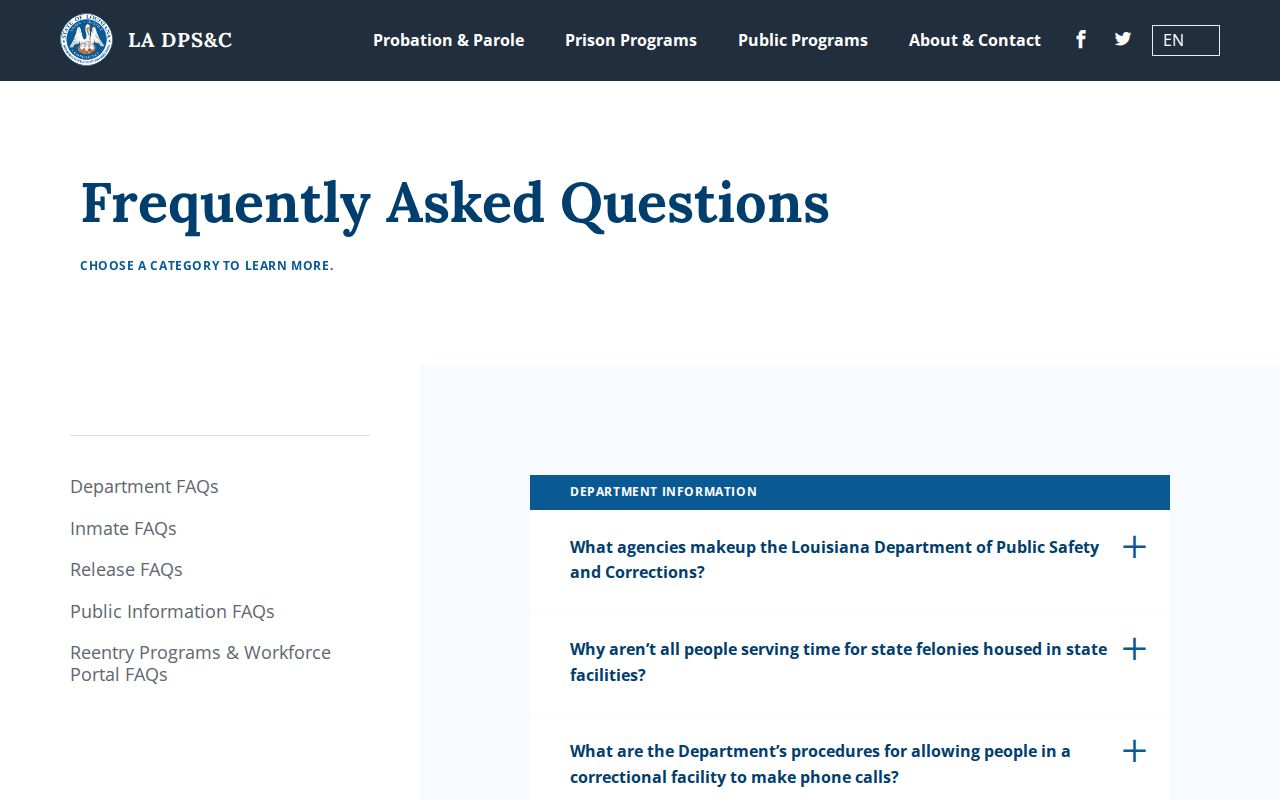
The agency explanation supports waiting for the official computation rather than filling the gap with an estimate.
Louisiana Good-Time Date Divide
August 1, 2024 is the key offense-date divide in the current Louisiana framework. For offenses committed on or after that date, R.S. 15:571.3.1 allows eligible felony offenders in parish prison or DPS&C custody to earn good-time diminution up to 15% of the imposed sentence. This is often described in practical terms as an 85% service framework, but it is not a universal rule for every case.
The modern statute has major limits. Its subsection B excludes sex offenses under R.S. 15:541 and habitual-offender sentences under R.S. 15:529.1. Additional program diminution under R.S. 15:828 has a separate exclusion. Presentence time credited under C.Cr.P. art. 880 does not itself earn good time under subsection D. Credits may be forfeited, and the DPS&C secretary decides their earning and allowance.
Older offenses remain under the layered provisions of R.S. 15:571.3. Rates can vary by offense date, parish-prison or state custody, sentence type, and violence or sex classifications. One provision uses 30 days of credit for 30 days of actual custody for certain eligible parish-prison sentences without hard labor. A first crime of violence has a different 3-for-17 rate. These examples show why one blanket percentage is unsafe.
Parole eligibility should not be substituted for the projected release field. R.S. 15:574.4 contains eligibility rules and many exceptions, but eligibility means a person may be considered under the controlling law. It is not a promised date. A Board grant is also subject to lawful conditions and processing before physical departure. Record the Board result, the DPS&C projection, and the actual release as three separate facts.
Good-time rule: Use the law tied to the offense date and let the official custodian compute the person’s date.
Note: New-law presentence custody credit reduces time owed but does not itself earn good-time credit under the cited subsection.
Why Beauregard Release Dates Change
A projected date reflects the facts and law known at the time of computation. Later records can move it. R.S. 15:571.4 permits forfeiture of credits for misconduct. Specified escape or failure-to-return events can result in loss of all credits, while other cases can involve forfeiture up to 180 days.
| Change | Possible effect | Source to verify |
|---|---|---|
| Credit earned or adjusted | Moves the current projection under applicable law | DPS&C or parish jail computation |
| Misconduct forfeiture | Removes credits and can move the date later | Agency disciplinary and time-computation record |
| New or amended judgment | Changes the term or sentence structure | 36th JDC judgment and agency recalculation |
| Detainer or hold | May cause transfer or continued custody after one release | Holding and receiving agencies |
| Parole ruling | May authorize conditional release, subject to later processing | Committee ruling, LAVNS, DPS&C |
| Revocation | May return a supervised person to custody and alter the timeline | Court, Board, and DPS&C records |
A parole grant is not the physical exit date. The official ruling shows the panel’s decision, while DPS&C and LAVNS show later custody and supervision events. Likewise, a BPSO release card might record transfer to DPS&C, not return to the community.
Beauregard Jail and State Dates
The Beauregard Parish Detention Center and DPS&C must not be treated as one system. A local sentence requires the jail or sheriff’s official computation under the law that applies to that sentence. A state sentence requires DPS&C computation. The 36th Judicial District Court supplies the judgment and can show credit or amendments, but the court’s sentence entry may not state the hour a facility processed release.
BPSO’s public 48-hour released roster confirms only after the local event is processed. It gives a precise release timestamp, booking timestamp, name, number, charges, photo, and sometimes bond. It does not visibly state release reason or destination. A person may leave BPSO because of community release, state transfer, placement in another parish, federal pickup, or immigration custody.
Reported overflow makes that distinction important in Beauregard Parish. People tied to parish cases can be housed in neighboring facilities. If a name leaves the local roster, call BPSO for the actual custodian before asking another facility for a release date. The receiving agency controls its own continued-custody record.
DeRidder Police adds another local distinction. The city agency arrests and creates incident records, but its official response says arrestees are booked and held by BPSO. A DeRidder arrest report can explain the underlying event. It does not replace BPSO’s booking and release record. Start with the jail for the custody exit, then use the police report only for the arrest record it actually holds.
Confirm Beauregard Actual Release
Once a projected date arrives, check for the completed event. For a local booking, review the BPSO released feed within its rolling window and call the jail for disposition or destination. For state custody, check LAVNS and confirm through DPS&C. A person on community supervision may remain visible after prison exit. The Beauregard VINE inmate check explains how to register for a custody-event alert and read the reporting agency.
For an older state event, request an existing master-prison or release record showing actual physical release or discharge date, status, releasing facility, transfer destination, and supervision assignment. DPS&C public-record routing is available at DOCPublicRecords@doc.la.gov. Ask for electronic copies and a fee estimate. Protected details may be withheld or redacted.
For an older local event, send BPSO a narrow request with the full name, known aliases, date of birth when appropriate, booking number, booking date, and facility. Ask for existing records sufficient to show the actual release date and time, release mechanism, destination or receiving authority, and release authorization. Request a written legal basis for any redaction and ask whether another custodian holds the missing record.
Louisiana public-record law distinguishes online display from legal retention. The BPSO card can disappear after its rolling period while the underlying agency record remains subject to its retention schedule. R.S. 44:35 provides a five-business-day benchmark for a written determination or reasonable production-time estimate, not a promise that every record will be produced within five days.
Keep the projection and actual event separate in notes. If the date passes with no confirmed release, ask whether credits changed, a court correction arrived, another sentence applies, or a hold caused transfer. When records conflict, report each agency’s event and seek the certified or directly confirmed record instead of choosing the most convenient date.
Note: A future BOP date, an ICE result, or a court order belongs to that system and does not replace Louisiana custody confirmation.